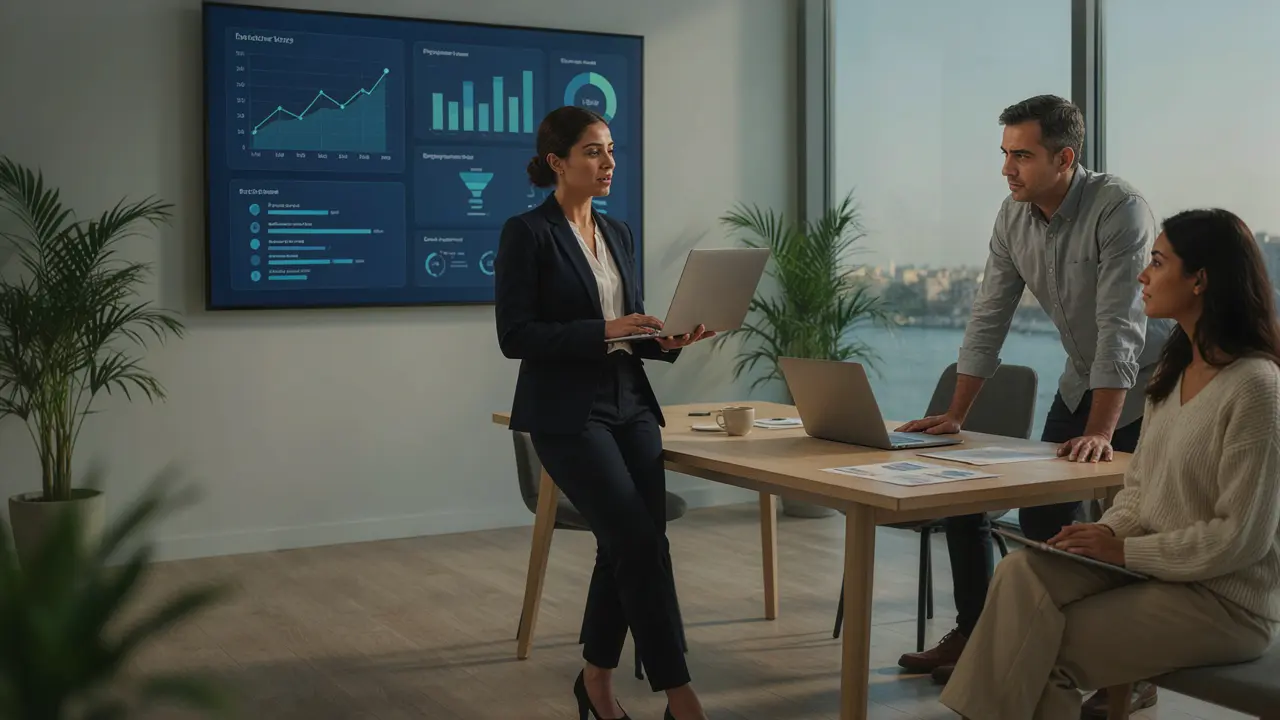
The modern workplace is undergoing a rapid transformation where technology and human capability are becoming deeply interconnected. Women Leaders Shaping Strategy in the AI Era, Within this shift women leaders take on active strategic roles amid AI adoption is emerging as a powerful theme across global organizations. As artificial intelligence becomes embedded in decision making systems women leaders take on active strategic roles amid AI adoption is influencing how businesses design strategies and manage change.
At the same time HR trends and insights reveal that leadership is no longer defined only by hierarchy or experience. Instead women leaders take on active strategic roles amid AI adoption reflects a broader movement toward inclusive and adaptive leadership styles that can respond to fast evolving digital ecosystems.
Subheading AI driven transformation and the expansion of leadership responsibilities
As organizations integrate artificial intelligence into daily operations leadership roles are becoming more complex and multidimensional. Women leaders take on active strategic roles amid AI adoption highlights how leadership is extending beyond traditional management into areas such as data driven decision making and innovation governance.
Furthermore workplace management strategies are evolving to support this transformation. Women leaders take on active strategic roles amid AI adoption shows how leaders are now expected to balance technological efficiency with human understanding. This balance is becoming essential for sustainable organizational growth.
Subheading Human centered leadership in a technology driven world
Even as automation and machine learning reshape business processes the human element remains central to success. Employee engagement research consistently shows that people perform better when they feel understood and valued. Women leaders take on active strategic roles amid AI adoption plays a significant role in ensuring that human needs are not overshadowed by technological advancement.
In addition women leaders take on active strategic roles amid AI adoption strengthens emotional intelligence in leadership practices. This helps organizations maintain empathy driven cultures even as they scale digital transformation initiatives.
Subheading Strategic decision making in evolving business environments
Leadership development insights suggest that decision making in the AI era requires both analytical thinking and contextual understanding. Women leaders take on active strategic roles amid AI adoption supports this dual requirement by bringing diverse perspectives into strategic discussions.
Moreover talent acquisition trends indicate that organizations are increasingly prioritizing leaders who can bridge the gap between technology and people. Women leaders take on active strategic roles amid AI adoption demonstrates how leadership is evolving to meet this expectation by integrating both data literacy and interpersonal awareness.
Subheading The impact of leadership diversity on organizational success
Diversity in leadership has long been associated with better business outcomes and innovation. Women leaders take on active strategic roles amid AI adoption reinforces this idea by showing how varied perspectives improve problem solving and strategic planning.
Additionally HR trends and insights highlight that organizations with diverse leadership teams are more resilient during periods of change. Women leaders take on active strategic roles amid AI adoption contributes to this resilience by encouraging inclusive decision making processes that reflect broader workforce needs.
Subheading Aligning leadership with future of work expectations
Future of work research indicates that adaptability will be one of the most important skills for organizations moving forward. Women leaders take on active strategic roles amid AI adoption aligns with this expectation by promoting flexible leadership approaches that respond quickly to technological and market changes.
At the same time women leaders take on active strategic roles amid AI adoption encourages organizations to rethink traditional leadership models. Instead of rigid hierarchies companies are moving toward collaborative and agile structures that support continuous learning and innovation.
Subheading Strengthening workplace culture through inclusive leadership
Workplace culture plays a critical role in determining organizational success. Women leaders take on active strategic roles amid AI adoption helps build cultures that prioritize communication transparency and collaboration. This creates environments where employees feel more engaged and motivated.
Furthermore workplace management strategies benefit significantly from leadership that values inclusion. Women leaders take on active strategic roles amid AI adoption ensures that cultural development keeps pace with technological transformation and organizational growth.
As AI systems become more advanced there is a growing need for emotional intelligence in leadership. Women leaders take on active strategic roles amid AI adoption brings this balance into focus by combining data driven insights with human empathy.
In addition leadership development insights emphasize that emotional intelligence is essential for managing teams in high change environments. Women leaders take on active strategic roles amid AI adoption supports this by fostering trust communication and psychological safety within organizations.
Subheading Enhancing employee engagement in AI powered workplaces
Employee engagement research shows that people are more productive when they feel connected to their leaders and organizational mission. Women leaders take on active strategic roles amid AI adoption enhances this connection by promoting transparent communication and supportive leadership styles.
Moreover HR trends and insights suggest that engagement improves when employees see their leaders actively involved in both strategic and operational challenges. Women leaders take on active strategic roles amid AI adoption strengthens this involvement by bridging gaps between leadership and employees.
Subheading Talent acquisition and leadership evolution in the AI era
The recruitment landscape is evolving rapidly as organizations seek leaders who can manage both people and technology. Women leaders take on active strategic roles amid AI adoption reflects this shift by highlighting the importance of adaptability and strategic thinking in leadership selection.
At the same time talent acquisition trends show that leadership diversity is becoming a key factor in organizational competitiveness. Women leaders take on active strategic roles amid AI adoption supports this trend by bringing broader perspectives into hiring and development strategies.
Subheading Building future ready organizations through adaptive leadership
Organizations that succeed in the long term are those that can adapt quickly to change. Women leaders take on active strategic roles amid AI adoption contributes to this adaptability by encouraging continuous learning and flexible decision making.
Future of work research further emphasizes that leadership agility will define organizational resilience. Women leaders take on active strategic roles amid AI adoption helps organizations prepare for uncertainty by promoting forward thinking leadership approaches.
Subheading The integration of strategy technology and human insight
One of the most significant outcomes of this shift is the integration of technology and human insight in leadership decision making. Women leaders take on active strategic roles amid AI adoption demonstrates how strategic thinking now requires both analytical precision and emotional understanding.
Additionally, HR trends and insights show that organizations are increasingly successful when leadership aligns technological adoption with employee wellbeing. Women leaders take on active strategic roles amid AI adoption plays a key role in achieving this alignment.
Valuable insights for practical application
Organizations aiming to thrive in the AI era must focus on developing leadership pipelines that encourage both technical understanding and emotional intelligence. Women leaders take on active strategic roles amid AI adoption shows that balanced leadership is essential for long term success. Companies should invest in leadership development programs that integrate digital skills with human centered capabilities.
Furthermore workplace management strategies should support inclusive environments where diverse leadership voices are encouraged. Women leaders take on active strategic roles amid AI adoption highlights that such environments lead to stronger innovation better engagement and improved organizational resilience.
Source – hcamag.com