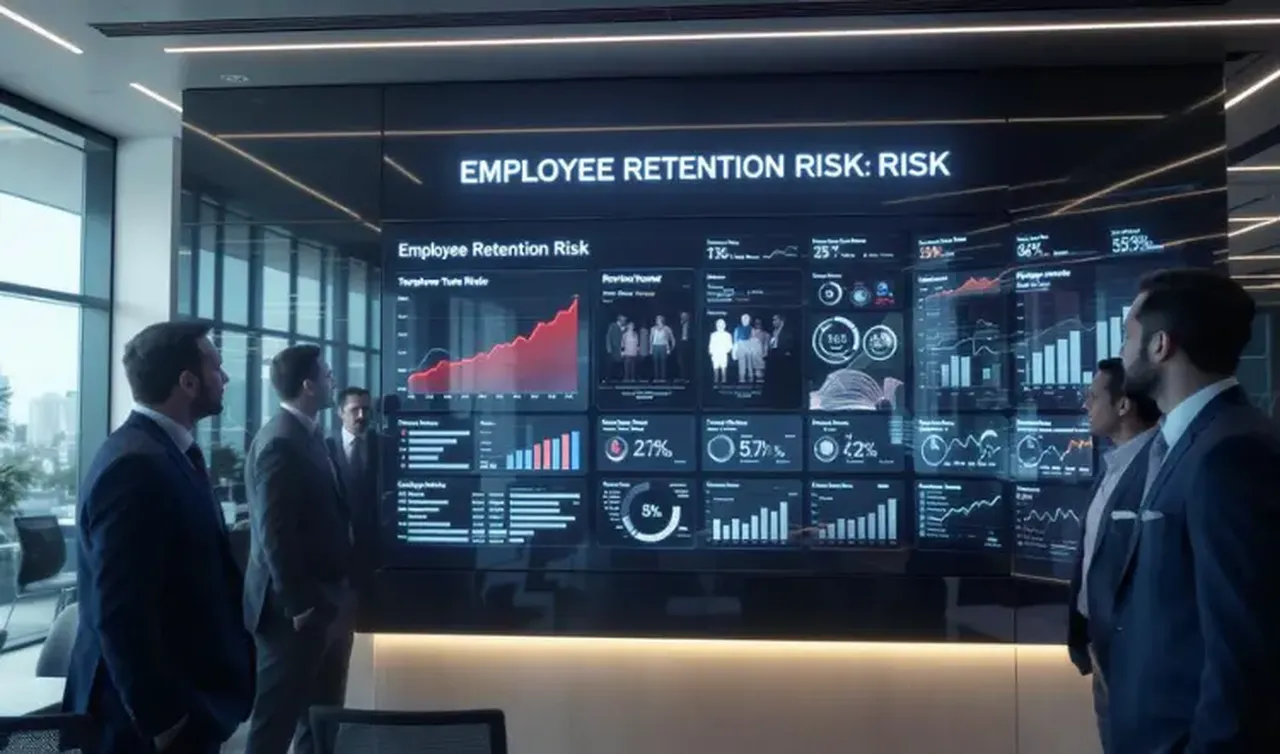
Data reveals rising risks in employee retention trends across industries as organizations continue to face challenges in keeping skilled employees engaged for the long term. This growing pattern is reshaping how companies think about workforce planning and organizational stability. As businesses expand in complex environments, retention has become a critical factor influencing productivity and overall performance.
Moreover, Data reveals rising risks in employee retention trends is not just a statistical observation but a reflection of deeper workplace shifts. Employees today prioritize flexibility, growth opportunities, and meaningful work, which are often missing in traditional organizational structures.
Understanding the data behind workforce movement
Recent workforce analysis shows that Data reveals rising risks in employee retention trends is closely linked with changing employee expectations and evolving job markets. As industries become more competitive, skilled professionals are frequently exploring better opportunities that align with their personal and career goals.
In addition, HR trends and insights indicate that resignation patterns are no longer isolated events but part of a larger structural movement within the labor market. Therefore, organizations must understand that Data reveals rising risks in employee retention trends reflects both internal organizational gaps and external market pressures.
Furthermore, workplace analytics show increased movement among mid level professionals who seek better career progression. Consequently, companies are now re evaluating their engagement and retention strategies more frequently than before.
Workplace management strategies and evolving expectations
Workplace management strategies are undergoing a significant transformation as Data reveals rising risks in employee retention trends continues to shape leadership priorities. Organizations are now focusing more on employee experience rather than only operational efficiency.
Additionally, flexible work models, skill development programs, and recognition systems are becoming essential components of modern workplaces. As a result, companies that fail to adapt often experience higher turnover rates.
Transitioning from traditional management approaches, leaders are increasingly adopting people centric strategies that emphasize trust and communication. This shift directly connects with Data reveals rising risks in employee retention trends as organizations attempt to stabilize their workforce.
Moreover, Employee engagement research highlights that employees who feel valued and heard are significantly more likely to remain with their employers. Therefore, engagement has become a central pillar in retention planning.
Talent acquisition trends and hiring challenges
Talent acquisition trends are also being influenced by Data reveals rising risks in employee retention trends. Hiring new employees is becoming more complex as organizations struggle to maintain long term retention stability.
In addition, recruitment strategies are shifting toward quality of hire rather than speed of hire. This ensures that new employees align better with organizational culture and expectations.
Furthermore, Data reveals rising risks in employee retention trends indicates that hiring alone cannot solve workforce instability. Instead, companies must focus on creating environments where employees can grow and develop continuously.
Leadership development insights also suggest that managers play a crucial role in shaping employee experience. Effective leadership directly impacts motivation, engagement, and ultimately retention outcomes.
Employee engagement research and workplace satisfaction
Employee engagement research continues to show a strong correlation between engagement levels and retention outcomes. Data reveals rising risks in employee retention trends when employees feel disconnected from organizational goals or lack recognition for their contributions.
Moreover, communication gaps between leadership and employees often lead to dissatisfaction. As a result, employees may seek opportunities elsewhere that offer clearer direction and support.
Transitioning to more inclusive practices, organizations are now prioritizing feedback systems and performance transparency. These improvements help reduce uncertainty and strengthen trust within teams.
Additionally, Data reveals rising risks in employee retention trends when career development pathways are unclear. Employees want structured growth opportunities that allow them to progress within the organization rather than outside it.
Future of work research and changing workforce dynamics
Future of work research highlights that Data reveals rising risks in employee retention trends will continue unless organizations adapt to evolving workforce expectations. Hybrid work environments, digital collaboration tools, and flexible scheduling are becoming standard expectations.
Furthermore, employees now value autonomy and purpose driven roles more than traditional benefits alone. This shift requires companies to rethink their long term engagement strategies.
In addition, Data reveals rising risks in employee retention trends as younger generations enter the workforce with different priorities compared to previous generations. They expect continuous learning, career mobility, and strong organizational values.
Therefore, organizations that fail to align with these expectations may continue to experience higher turnover rates in the coming years.
Organizational response and strategic adaptation
Organizations responding to Data reveals rising risks in employee retention trends are investing in better communication systems, leadership training, and employee well being programs. These initiatives aim to build stronger connections between employees and management.
Moreover, companies are beginning to integrate HR technology platforms that track engagement and predict potential turnover risks. This proactive approach allows leaders to address issues before they escalate.
Transitioning toward a more data driven HR model, organizations are also using analytics to understand workforce behavior patterns more effectively. This helps align business goals with employee expectations.
Additionally, Data reveals rising risks in employee retention trends encourages organizations to rethink compensation structures, recognition systems, and internal mobility frameworks.
Insights for strengthening retention outcomes
The growing importance of employee retention highlights the need for organizations to focus on long term engagement rather than short term hiring success. Data reveals rising risks in employee retention trends when organizations overlook communication, career development, and workplace culture.
Moreover, combining HR trends and insights with Employee engagement research allows companies to build stronger workforce strategies. Workplace management strategies must evolve continuously to meet changing employee expectations.
In addition, integrating Talent acquisition trends with Leadership development insights ensures that organizations not only hire the right talent but also retain and develop them effectively. Future of work research further reinforces the need for adaptable and resilient workforce models.
Strategic perspective for HR leaders
Data reveals rising risks in employee retention trends is a clear signal that organizations must prioritize people centered strategies. Companies that invest in engagement, leadership development, and workplace flexibility are more likely to build stable and productive teams.
As competition for skilled talent intensifies, retention will remain a key differentiator for business success. Therefore, organizations must act proactively rather than reactively to workforce challenges.
For deeper HR intelligence and strategic workforce insights, connect with HRInfoPro and explore how data driven HR transformation can improve retention and organizational performance.