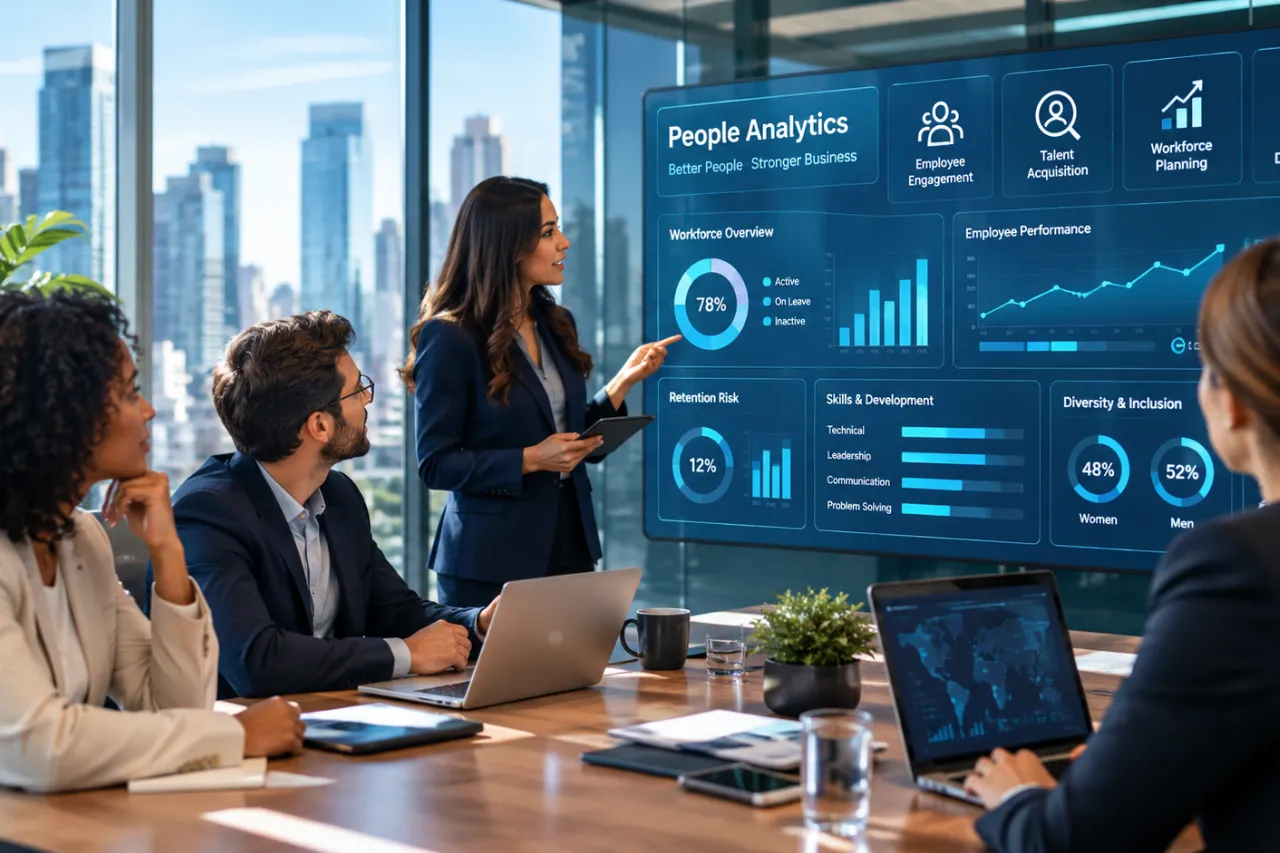
Digital transformation is changing how organisations manage their employees, develop talent and make workforce decisions. Across Brazil, businesses are increasingly recognising the importance of using employee data to improve human resource management. As a result, People Analytics is becoming an important part of modern HR strategies, helping organisations move beyond traditional administrative processes towards more informed decision making.
Previously, HR departments often relied on manual reporting and historical information to evaluate workforce performance. However, digital platforms now allow businesses to analyse employee engagement, recruitment outcomes, productivity and retention patterns more effectively. Consequently, HR professionals can identify workforce challenges earlier and develop strategies that support long term organisational growth.
This shift also reflects wider HR trends and insights, particularly as Brazilian companies adapt to changing employee expectations and increasingly competitive labour markets.
Brazil’s evolving business environment is encouraging organisations to modernise their HR operations. Cloud based HR platforms, artificial intelligence and advanced analytics are helping businesses manage employee information while improving operational efficiency.
Through these technologies, HR teams can access workforce information more quickly and identify patterns that might otherwise remain unnoticed. For example, analysing absenteeism, employee turnover and performance trends can help managers understand the factors influencing workplace productivity.
Furthermore, digital transformation supports better collaboration between HR departments and business leadership. Instead of treating HR as a purely administrative function, organisations can use workforce insights to connect employee performance with broader business objectives.
As these capabilities expand, workplace management strategies are becoming increasingly data driven.
Artificial Intelligence and Predictive HR Analytics
Artificial intelligence is creating new opportunities for workforce planning in Brazil. Predictive analytics allows organisations to examine historical employee information and identify potential future challenges.
For instance, businesses can evaluate turnover patterns to identify departments experiencing higher employee departures. Similarly, recruitment analytics can help hiring teams understand which sourcing channels attract suitable candidates and where recruitment processes need improvement.
Moreover, AI powered systems can support skills assessments, workforce forecasting and personalised employee development. These capabilities help HR professionals make more informed decisions while reducing repetitive administrative work.
Nevertheless, technology should complement human judgement rather than replace it. Employee performance, motivation and workplace relationships involve factors that cannot always be measured through numerical information.
Improving Employee Engagement Through Workforce Insights
Employee engagement remains an important factor in organisational performance. In Brazil, businesses are increasingly exploring how employee feedback, workplace surveys and performance information can reveal opportunities to improve working conditions.
People Analytics can help HR teams understand employee satisfaction and identify factors associated with disengagement. For example, recurring feedback about management practices, workload distribution or career opportunities can highlight areas requiring attention.
Additionally, employee engagement research can help organisations evaluate whether workplace initiatives are producing meaningful improvements. Instead of introducing generic engagement programmes, employers can develop initiatives based on actual employee experiences.
However, transparency is essential. Employees should understand how their information is collected and used. When organisations communicate openly about data practices, they can strengthen trust and encourage greater participation in feedback programmes.
Recruitment is another area experiencing significant changes through digital HR solutions. Brazilian employers increasingly need effective approaches to attract skilled professionals while managing hiring costs and competitive talent requirements.
Analytics can help recruitment teams assess application trends, hiring timelines and candidate conversion rates. Consequently, organisations can identify delays in recruitment processes and understand which hiring channels deliver stronger results.
Furthermore, talent acquisition trends indicate the growing importance of skills based recruitment. Rather than focusing exclusively on academic qualifications or previous job titles, employers can evaluate candidates according to their capabilities and potential.
This approach also supports better workforce planning because businesses can identify existing skills gaps and prepare for future recruitment requirements.
Leadership Development and Strategic Decision Making
Digital workforce insights are also influencing leadership development across Brazilian organisations. Managers can use performance information, employee feedback and skills assessments to understand leadership capabilities and identify development opportunities.
For example, workforce analytics may reveal differences in employee engagement between departments. These patterns can encourage organisations to examine management practices and provide targeted leadership training.
Additionally, leadership development insights can help businesses identify employees with potential for future management responsibilities. By connecting development programmes with measurable workforce needs, organisations can build stronger internal talent pipelines.
As a result, HR teams can contribute more directly to succession planning, organisational stability and long term business performance.
Although advanced analytics offers considerable benefits, it also introduces important responsibilities. Brazil’s General Data Protection Law, known as LGPD, establishes requirements for organisations that process personal information.
Therefore, companies using workforce analytics must ensure that employee information is handled responsibly. Clear data collection practices, appropriate access controls and suitable security measures are essential for protecting sensitive information.
Moreover, organisations should avoid using automated systems without considering fairness and potential bias. Recruitment and performance evaluation tools must be reviewed regularly to ensure that technology does not create unfair outcomes.
Ultimately, responsible data management is necessary to maintain employee confidence while supporting digital HR innovation.
Insights for the Future of HR in Brazil
The future of work research increasingly highlights the importance of combining technology, workforce intelligence and human centred management. For Brazilian businesses, successful digital transformation will depend on how effectively they translate employee information into practical organisational improvements.
HR leaders should begin by identifying the workforce challenges they want to address rather than adopting analytics platforms simply because the technology is available. They should also establish clear data governance practices, invest in analytical skills and regularly evaluate the effectiveness of HR initiatives.
Furthermore, combining employee feedback with quantitative information can provide a more balanced understanding of workplace conditions. This approach enables organisations to improve recruitment, strengthen engagement and prepare employees for changing business requirements.
As digital capabilities continue to evolve, organisations that balance data driven decisions with empathy and transparency will be better positioned to build productive and resilient workplaces.
Stay informed with HRInfoPro for the latest HR trends and insights, workplace management strategies and developments shaping the future of work. Connect with HRInfoPro to explore practical workforce solutions and discover insights that support smarter HR decisions and sustainable organisational growth.