Human resource management is undergoing a major transformation as business leaders increasingly recognise the value of workforce data. From employee productivity to talent retention, organisations want clearer insights into how their people influence business performance. However, despite this growing interest, confidence in HR’s ability to deliver meaningful workforce intelligence remains relatively low.
According to Mercer’s 2026 Global Talent Trends research, only 27% of executives believe their HR teams effectively advise them on human capital risks and opportunities. Meanwhile, 57% of C suite executives identify improving people analytics capabilities as the people initiative most likely to generate returns in 2026.
This difference highlights an important challenge for modern HR departments. Although executives recognise the strategic importance of workforce intelligence, many still expect more actionable insights from their HR teams.
Why Executives Are Questioning HR’s Analytical Capabilities
Traditionally, HR departments have focused on administrative responsibilities, recruitment, payroll, employee records and performance reporting. While these activities remain essential, business leaders now expect HR professionals to contribute more directly to organisational strategy.
For example, executives want to understand how artificial intelligence could influence workforce productivity, which skills will become more valuable and what leadership behaviours contribute to stronger employee performance.
However, many HR departments continue to concentrate on historical reporting rather than future workforce requirements. Consequently, the information presented to senior management does not always address the decisions they need to make.
Furthermore, fragmented employee information and limited analytical expertise can make it difficult to produce consistent workforce insights. As a result, HR teams risk losing credibility when their recommendations cannot be connected to measurable business outcomes.
Moving Beyond Traditional HR Reporting
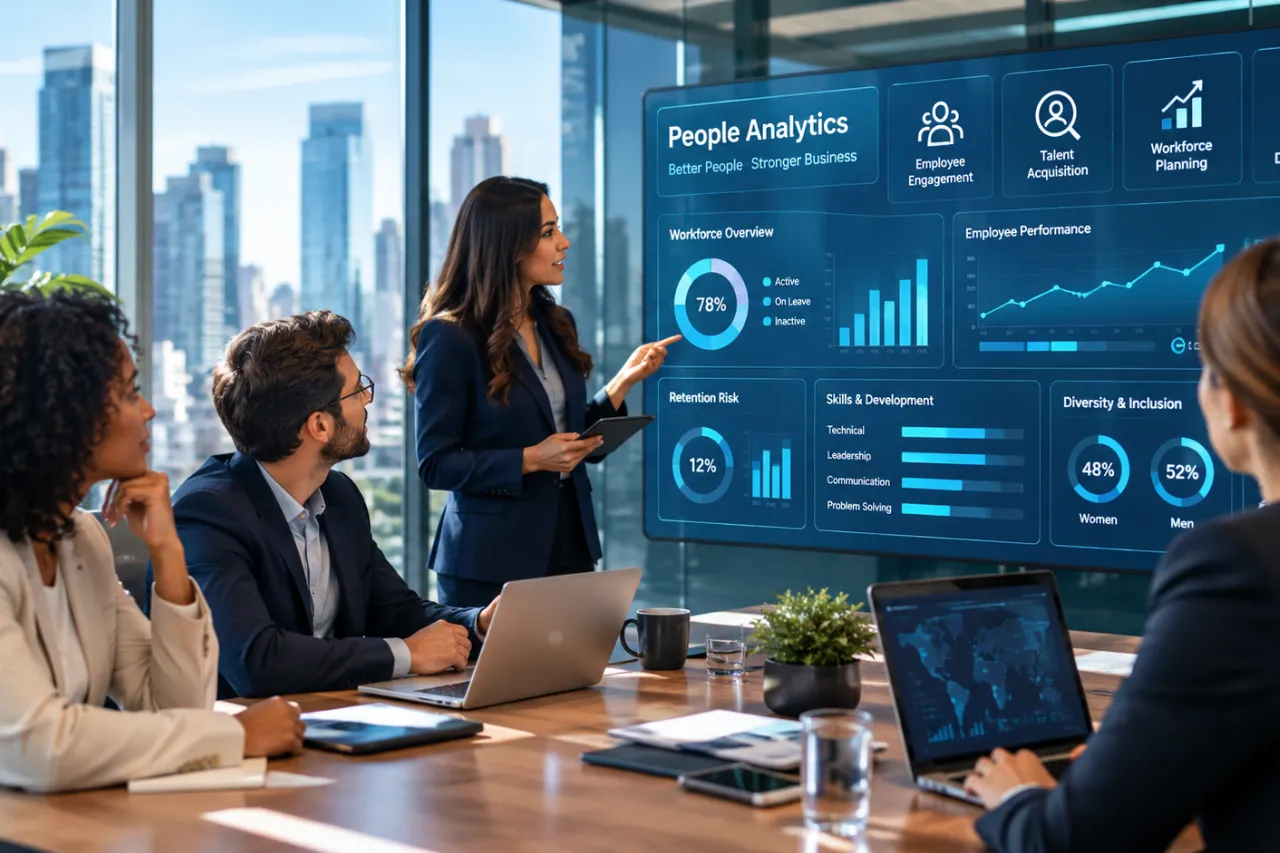
One of the biggest opportunities for HR departments is moving from basic reporting towards predictive and strategic workforce analysis.
Traditional reporting explains what has already happened. For instance, HR teams may present employee turnover figures, recruitment costs and annual performance results. Although these measurements provide useful information, they do not necessarily explain why certain workforce challenges occur.
By comparison, advanced analytics can identify patterns, explore potential causes and support future planning. For example, organisations can examine employee departure trends to identify retention risks before experienced professionals leave.
Additionally, workforce analytics can help businesses understand skills shortages, evaluate training investments and assess the relationship between employee engagement and productivity.
This transformation requires HR professionals to develop stronger analytical capabilities while connecting workforce information with wider organisational objectives.
Artificial Intelligence Is Raising Expectations for HR
Artificial intelligence is changing how businesses approach workforce planning and talent management. Executives increasingly expect HR departments to explain how automation may affect existing roles, future recruitment requirements and employee development.
For instance, predictive analytics can help organisations identify skills that may become less relevant as automation expands. Similarly, workforce planning tools can highlight emerging capability gaps and recommend areas where employee training may be valuable.
Moreover, AI powered recruitment platforms can help hiring teams analyse candidate information, improve recruitment efficiency and identify talent acquisition trends.
Nevertheless, adopting advanced technology alone will not solve the credibility gap. HR professionals must understand how these tools work and communicate their findings in a way that supports practical business decisions.
To earn greater confidence from senior leadership, HR departments need to demonstrate how workforce decisions influence organisational performance.
For example, instead of simply reporting employee engagement scores, HR teams can examine whether improvements in workplace satisfaction correspond with better retention or productivity.
Similarly, recruitment analytics can help businesses understand the relationship between hiring quality, employee performance and long term workforce stability.
These insights also support more effective workplace management strategies. Managers can identify departments experiencing workload challenges, evaluate leadership effectiveness and introduce targeted improvements.
Furthermore, employee engagement research can reveal what motivates employees, which workplace conditions influence satisfaction and where management practices require attention.
When HR connects these findings with financial and operational results, its contribution becomes easier for executives to recognise.
Developing HR Teams Into Strategic Business Partners
Building analytical credibility requires more than investing in software. HR professionals also need the skills to interpret information, identify meaningful patterns and communicate recommendations confidently.
Leadership development insights can help organisations prepare managers to make evidence based workforce decisions. Meanwhile, collaboration between HR, finance, IT and business operations can improve access to reliable information.
Additionally, businesses should establish consistent data definitions and governance practices. When different departments rely on conflicting workforce figures, leadership confidence can quickly decline.
Transparency is equally important. Employee information must be handled responsibly, with appropriate privacy safeguards and clear policies governing the use of automated decision making.
By strengthening these capabilities, HR can gradually move beyond its traditional administrative role and become a more influential strategic partner.
Insights for Building Executive Trust in HR Analytics
The gap between executive expectations and HR capabilities presents an opportunity for organisations to rethink how workforce intelligence is developed and communicated.
HR leaders should begin by understanding the most important workforce questions facing their business. Instead of producing numerous dashboards, they should prioritise insights that address recruitment challenges, employee retention, productivity and future skills requirements.
Furthermore, every analytical recommendation should connect with a measurable business objective. Tracking the impact of workforce initiatives over time can demonstrate whether HR strategies are producing meaningful improvements.
Future of work research also reinforces the importance of combining technological innovation with human judgement. Although advanced analytics can identify patterns, effective leadership still requires an understanding of employee experiences and organisational culture.
Ultimately, executive confidence will grow when HR consistently delivers reliable information, explains its business implications and helps leaders make better decisions about their workforce.
Stay ahead of emerging HR trends and insights with HRInfoPro, your resource for workplace innovation, talent management and strategic workforce developments. Connect with HRInfoPro to explore practical HR solutions and discover insights that help your organisation build stronger teams and achieve sustainable business growth.
Source – hrexecutive