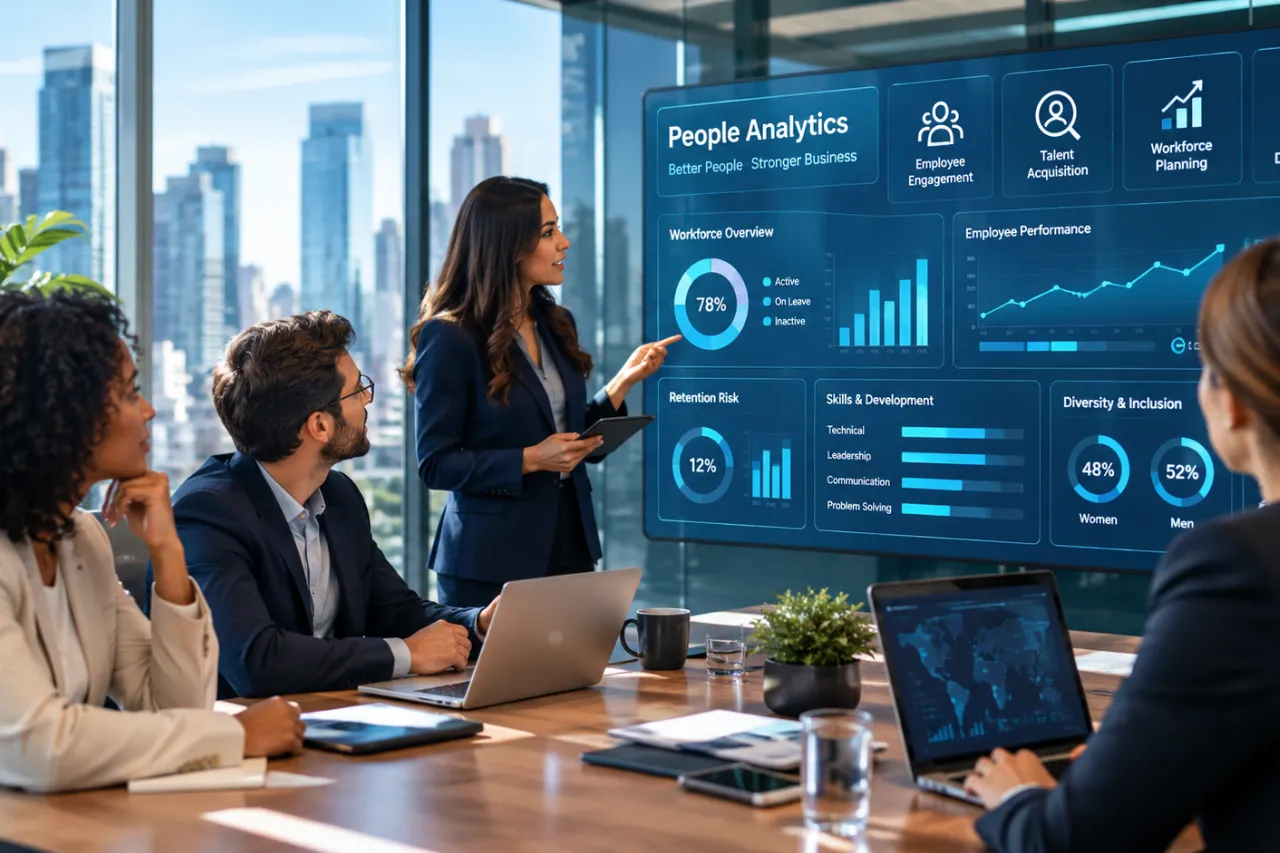
The way organisations manage their workforce is changing rapidly as technology becomes an essential part of everyday business operations. Human resource departments are no longer limited to recruitment, payroll administration and employee documentation. Instead, they are increasingly expected to support business growth, improve workforce productivity and strengthen employee experiences.
This shift has made HR digital transformation an important priority for organisations across industries. By adopting modern technologies, companies can simplify administrative processes, make better workforce decisions and respond more effectively to changing employee expectations.
However, successful transformation involves more than purchasing new software. It requires a clear strategy, strong leadership and a workplace culture that encourages employees to embrace digital change.
HR digital transformation refers to the integration of modern technologies into human resource processes to improve efficiency, accuracy and decision making. It involves moving away from disconnected manual systems towards integrated digital platforms that support the entire employee lifecycle.
For example, cloud based HR management systems can centralise employee records, automate leave requests and simplify payroll administration. Similarly, artificial intelligence can support recruitment, workforce analytics and employee development.
Furthermore, digital platforms allow HR professionals to access relevant workforce information more quickly. As a result, they can spend less time managing repetitive administrative tasks and more time supporting strategic business objectives.
One of the most significant advantages is improved operational efficiency. Automated workflows reduce repetitive work, minimise manual errors and allow HR teams to manage larger workforces without increasing administrative pressure.
Additionally, digital systems improve employee engagement by making workplace services easier to access. Employees can update personal information, request leave, review benefits and complete training through self service platforms. Consequently, these tools create a more convenient workplace experience.
Another important benefit is data driven decision making. HR analytics platforms help organisations understand employee turnover, recruitment performance, workforce productivity and skill gaps. Therefore, leadership teams can make more informed decisions about workforce planning.
These developments also support stronger workplace management strategies because managers gain better visibility into team performance and organisational requirements.
Artificial Intelligence Is Reshaping HR Operations
Artificial intelligence is creating new opportunities for human resource departments. Recruitment platforms can help identify suitable candidates, analyse applications and support initial screening. Meanwhile, AI powered assistants can answer routine employee questions and provide guidance on internal policies.
Moreover, predictive analytics can help HR teams identify potential retention challenges and anticipate future workforce requirements.
Nevertheless, organisations must introduce these technologies responsibly. Employee privacy, algorithmic bias and transparency should remain important considerations. Human oversight is particularly necessary when AI influences recruitment, performance evaluation or other employment decisions.
Consequently, companies should establish clear governance policies before expanding AI adoption across their HR operations.
Improving Recruitment and Talent Management
Recruitment processes are becoming more technology driven as organisations compete for specialised skills. Digital application systems, automated interview scheduling and candidate relationship platforms can reduce hiring delays while improving communication.
These developments reflect changing talent acquisition trends, where candidates increasingly expect accessible application processes and timely updates.
Furthermore, integrated recruitment platforms help HR teams maintain consistent candidate information throughout the hiring journey. This improves collaboration between recruiters and department managers.
Beyond recruitment, digital learning platforms support continuous employee development. Organisations can recommend training based on individual capabilities and future business requirements. As a result, employees gain opportunities to develop relevant skills while companies strengthen their internal talent pipelines.
Strengthening Employee Engagement and Leadership Development
Employee experience plays an important role in organisational performance. Digital communication platforms, employee feedback systems and engagement surveys provide HR teams with better opportunities to understand workforce expectations.
Employee engagement research also highlights the importance of listening to employees rather than relying entirely on management assumptions. Therefore, organisations should use digital feedback tools to identify workplace concerns and evaluate whether internal initiatives are delivering meaningful improvements.
At the same time, leadership development insights can help organisations identify management capability gaps and create targeted development programmes.
Digital learning environments, mentoring platforms and performance management systems can support leadership development at different career stages. Ultimately, technology becomes more valuable when it strengthens human relationships rather than replacing them.
Successful implementation begins with clearly defined business objectives. Organisations should identify existing HR challenges before selecting technology solutions. For instance, a company struggling with recruitment delays may benefit more from an integrated applicant tracking system than from adopting several unrelated platforms.
Furthermore, leadership support is essential. Managers should communicate the purpose of digital initiatives and explain how these changes will improve everyday work. Without proper communication, employees may view new systems as additional administrative responsibilities.
Training is equally important. HR professionals and employees need sufficient guidance to use new platforms confidently. In addition, companies should introduce changes gradually, gather feedback and resolve technical difficulties before expanding implementation.
Data security must also remain a priority. HR platforms contain sensitive employee information, so organisations should establish access controls, secure authentication and appropriate data retention policies.
Finally, businesses should measure progress through meaningful indicators such as recruitment time, employee satisfaction, administrative efficiency and training participation.
The Future of Work and Digital HR
Future of work research increasingly focuses on how automation, artificial intelligence and flexible working arrangements will influence organisational structures.
As these developments continue, HR departments will need to become more adaptable. Digital skills, workforce analytics and continuous learning will play an important role in preparing employees for changing responsibilities.
Moreover, organisations will need to balance technological efficiency with employee wellbeing. Although automation can simplify processes, successful workforce management still depends on communication, trust and supportive leadership.
Companies that combine digital innovation with thoughtful people management will be better positioned to respond to future workforce challenges.
Practical Insights for HR Leaders
HR leaders should approach technology adoption as a long term organisational investment rather than a short term software upgrade. Begin by evaluating existing processes, identifying administrative bottlenecks and understanding employee expectations.
Next, prioritise solutions that address genuine business needs and integrate effectively with existing systems. Track measurable improvements in employee experience, recruitment efficiency and workforce productivity.
Most importantly, involve employees throughout the transformation process. Their feedback can reveal practical challenges that may otherwise remain unnoticed.
HR digital transformation delivers its greatest value when technology, leadership and workplace culture work together towards shared organisational goals.
Connect with HRInfoPro for the latest HR trends and insights, practical workforce management guidance and expert perspectives on evolving workplace practices. Reach out to our team to explore emerging HR developments and discover strategies that support a more productive, engaged and future ready workforce.
Source – cornerstoneondemand