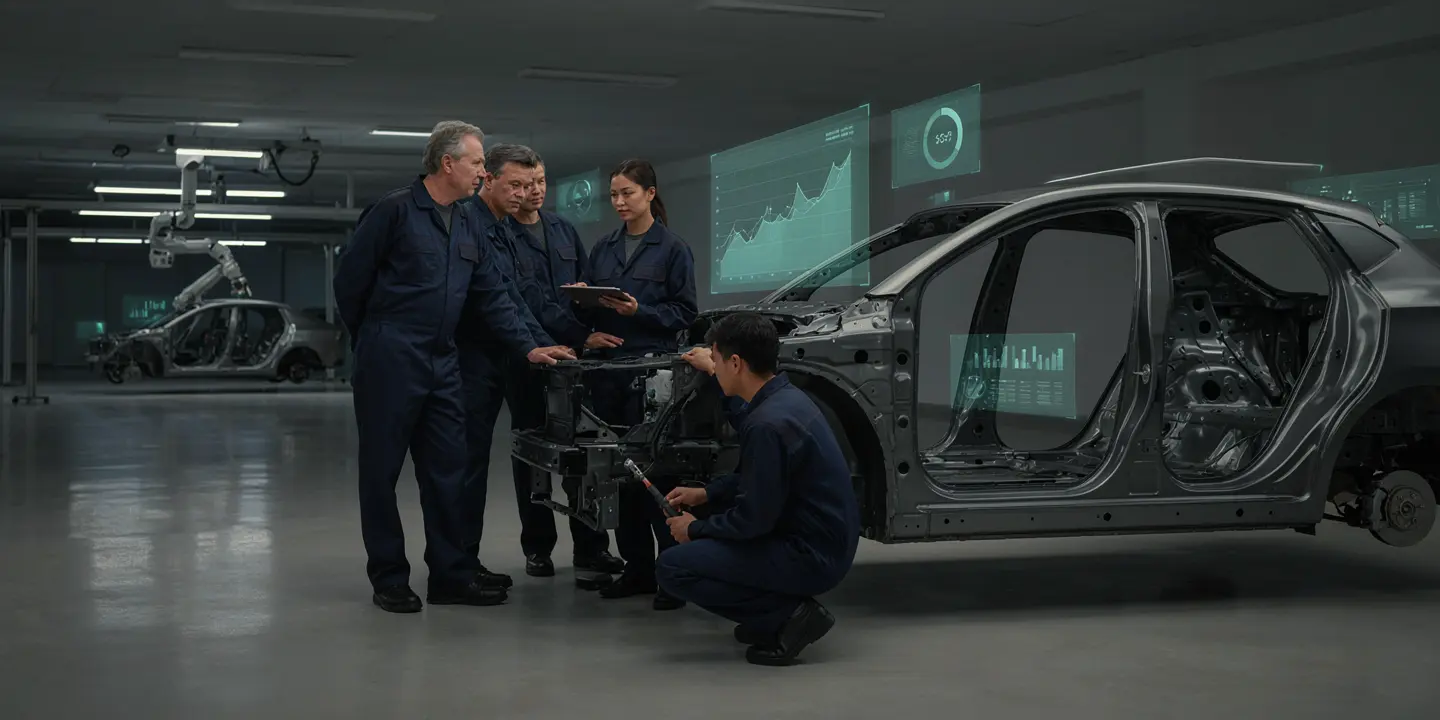
Ford has brought more than 350 experienced engineers into its workforce after automated quality systems and artificial intelligence failed to deliver the expected results. The move highlights an important development in current HR trends and insights as organisations reconsider how technology and experienced employees should work together.
According to reporting on Ford’s announcement, the returning engineers include former employees and specialists from supplier organisations. Their role is not simply to inspect vehicles. They are also helping younger employees develop technical knowledge while contributing experience that can improve the company’s AI systems.
The development provides an interesting perspective on the changing relationship between automation and human expertise. Rather than removing technology from the process, Ford is combining automated tools with experienced professionals.
Why Ford Brought Experienced Engineers Back
Ford executives acknowledged that the company had relied increasingly on automated quality systems but did not achieve the desired quality levels. Charles Poon, Ford’s vice president of vehicle hardware engineering, said the company had underestimated the importance of knowledge accumulated by experienced engineers across multiple product cycles.
The returning specialists are being used to identify potential failure points before components reach production. They are also helping train younger employees and improve the information used by AI systems.
This development demonstrates an important principle for workplace management strategies. Technology can process large amounts of information quickly, but experienced employees can provide context that may be difficult to capture in structured datasets.
AI Needs Human Knowledge and Quality Data
Artificial intelligence can analyse patterns, automate repetitive processes and support complex decision making. However, its performance depends heavily on the information used to train and operate the system.
Ford’s experience illustrates why institutional knowledge remains valuable. Experienced engineers often understand subtle manufacturing problems because they have encountered similar issues across different products and development cycles. When that knowledge leaves an organisation, replacing it with technology alone can be challenging.
Consequently, companies exploring AI adoption may need to think carefully about how expertise is transferred before experienced employees leave. Documentation, mentoring and knowledge sharing can become important components of effective talent strategies.
A New Perspective on Talent Acquisition Trends
Ford’s decision also connects with broader talent acquisition trends. For years, organisations have explored automation as a way to increase productivity and reduce operational costs. At the same time, demand for specialised technical expertise remains significant in many industries.
Bringing experienced professionals back into the organisation shows that talent acquisition does not always mean searching for entirely new skills. Organisations may also benefit from reconnecting with former employees who already understand their systems, products and culture.
This approach can be particularly valuable when experienced workers possess institutional knowledge that would otherwise take years to develop. As businesses introduce new technologies, retaining access to that knowledge can become an important workforce planning consideration.
Employee Experience and Knowledge Transfer
The Ford situation also provides useful insights into employee engagement research. Experienced professionals who have accumulated valuable knowledge can play an important role in developing younger colleagues.
Mentoring creates opportunities for employees to learn through practical experience rather than relying exclusively on formal training. Furthermore, experienced workers can help younger teams understand why certain processes exist and how previous challenges were addressed.
For HR leaders, this suggests that employee experience should extend beyond recruitment and onboarding. Knowledge sharing, career development and mentoring can help organisations preserve expertise while strengthening relationships between different generations of employees.
Leadership Development Through Practical Experience
Leadership development insights can also be drawn from the situation. When experienced engineers work alongside younger professionals, they can contribute technical knowledge while developing the next generation of workplace leaders.
This type of development can be particularly valuable in industries where decisions involve complex technical requirements. Employees can learn not only from formal programmes but also from experienced colleagues who have managed difficult situations throughout their careers.
Therefore, organisations introducing AI should consider how experienced employees can participate in technology transformation rather than treating automation and human expertise as competing alternatives.
AI Can Support People Rather Than Replace Them
Ford’s approach does not represent an abandonment of artificial intelligence. Reports indicate that the company continues to use AI powered testing and automated systems while placing greater emphasis on experienced engineers. Ford has reportedly added more than 100,000 AI powered validation tests to help identify software issues and edge cases.
This hybrid approach reflects a broader shift in the future of work research. Organisations are increasingly exploring how technology can enhance human capabilities instead of simply replacing workers.
For HR departments, the distinction matters. Workforce planning needs to consider which tasks technology can automate and which responsibilities require judgement, creativity, experience or interpersonal understanding.
What HR Leaders Can Learn From Ford
The Ford case offers several practical lessons for organisations undergoing digital transformation. First, businesses should identify critical knowledge before implementing major automation initiatives. Understanding where institutional expertise sits can help prevent important capabilities from disappearing.
Second, companies can create stronger knowledge transfer programmes by connecting experienced professionals with emerging talent. This can support employee development while helping organisations maintain continuity.
Finally, AI implementation should be evaluated alongside workforce capabilities. Technology can become more effective when employees understand how to use it, challenge its outputs and improve the information behind it.
These lessons reinforce the importance of combining HR trends and insights with practical workforce planning. Technology investments may deliver greater value when they are supported by the right people, skills and organisational knowledge.
Actionable Insights for HR Leaders
The Ford example highlights the importance of treating experienced employees as a source of organisational knowledge rather than simply viewing workforce transformation through an automation lens. Companies can document critical expertise, establish mentoring relationships and involve experienced professionals in the development of AI systems.
At the same time, HR teams can use workforce data to identify roles where institutional knowledge is concentrated and develop succession plans before those skills become difficult to replace.
The broader lesson is that successful transformation depends on the relationship between people and technology. AI can increase analytical capacity, while experienced employees can provide context, judgement and practical knowledge that make technological systems more useful.
Stay informed with practical HR trends and insights that explore changing workplaces, talent strategies and the future of employment.
Reach out to HRInfoPro for professional perspectives that can help your organisation build stronger and more adaptable workforce strategies.
Source – hrkatha