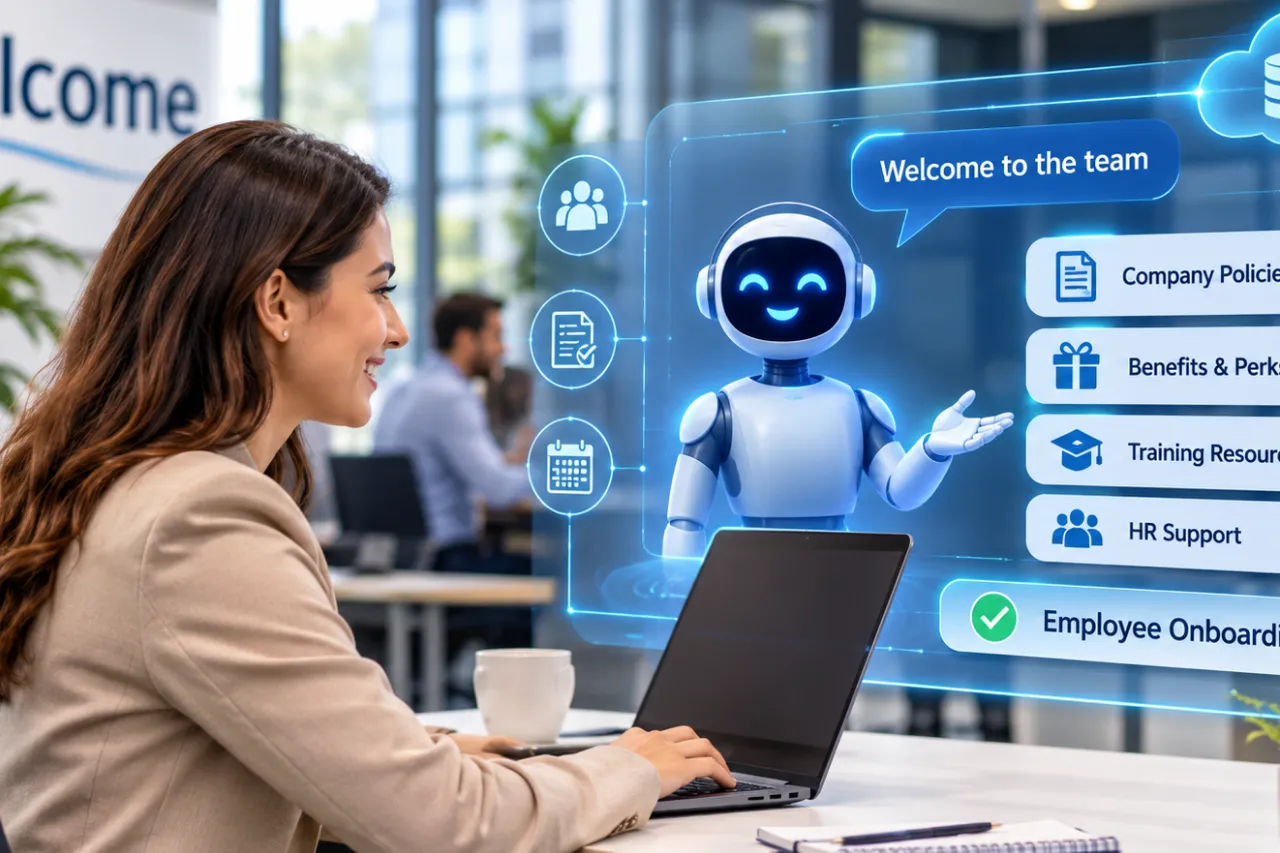
Employee onboarding plays an important role in shaping how new employees experience an organization. From completing documentation to understanding company policies and workplace expectations, the initial stages of employment can influence productivity, engagement, and long term retention.
However, traditional onboarding processes often involve repetitive administrative tasks, multiple communication channels, and delays in accessing essential information. As organizations expand and adopt digital workplace solutions, artificial intelligence is creating new opportunities to simplify these activities.
Enhancing employee onboarding with OIC AI Agents and Knowledge Base capabilities represents a step toward more connected and efficient HR operations. By combining intelligent automation with centralized organizational information, businesses can deliver a smoother experience for new employees while reducing the administrative workload on HR teams.
Understanding OIC AI Agents and Knowledge Base Capabilities
Oracle Integration Cloud, commonly known as OIC, enables organizations to connect applications, automate workflows, and exchange information across business systems.
When integrated with AI agents and a centralized knowledge base, these capabilities can support several onboarding activities. AI agents can interpret employee questions, retrieve relevant information, and initiate supported workflows through connected applications.
Meanwhile, a knowledge base provides a centralized source of information covering company policies, employee benefits, internal procedures, training materials, and frequently asked questions.
Together, these technologies can make onboarding more accessible and responsive. Rather than searching through multiple documents or waiting for an HR representative, new employees can use an AI powered interface to find relevant answers.
Automating Repetitive HR Activities
One of the biggest challenges in employee onboarding is managing repetitive administrative responsibilities. HR professionals frequently coordinate documentation, employee records, account requests, training schedules, and policy communication.
AI agents can help streamline these activities by connecting onboarding workflows with relevant enterprise applications.
For example, when a new employee joins, an integrated workflow may initiate document collection, notify relevant departments, and trigger account provisioning requests. Depending on system permissions and configuration, AI agents can also help employees understand the status of their onboarding activities.
Consequently, HR teams can spend less time managing routine requests and more time supporting employee development and workplace relationships.
New employees often have questions about leave policies, payroll procedures, workplace guidelines, benefits, and internal communication channels. When information is scattered across different platforms, finding accurate answers can become frustrating.
A centralized knowledge base addresses this challenge by organizing essential organizational information in one accessible location.
Furthermore, AI agents can use this information to provide relevant responses in conversational language. Employees can ask questions naturally instead of navigating complicated document libraries.
For instance, a new employee might ask about the company’s annual leave policy or how to access a training platform. The AI agent can retrieve information from approved knowledge sources and guide the employee toward the appropriate resources.
However, organizations should regularly review knowledge base content to ensure accuracy, relevance, and consistency.
Strengthening Employee Engagement and Workplace Productivity
A positive onboarding experience helps employees feel welcomed, informed, and confident in their new responsibilities. Therefore, technology should support meaningful employee interactions rather than simply accelerate administrative processes.
Employee engagement research highlights the importance of clear communication, timely assistance, and access to professional resources during the early stages of employment.
AI powered onboarding can support these expectations by offering consistent assistance and reducing unnecessary waiting periods.
Additionally, HR teams can use onboarding feedback to identify common challenges and improve existing processes. These improvements can contribute to stronger workplace management strategies and a more supportive employee experience.
Supporting HR Teams With Intelligent Workforce Management
The adoption of AI in HR reflects broader HR trends and insights surrounding automation, employee experience, and digital transformation.
By integrating AI agents with enterprise systems, organizations can improve information flow between HR, IT, payroll, and other departments. This coordination is particularly valuable for businesses managing large or geographically distributed workforces.
Moreover, talent acquisition trends increasingly emphasize the importance of delivering a consistent experience from recruitment through onboarding. A connected process helps maintain continuity between what candidates learn during recruitment and what they experience after joining.
Leadership development insights are equally important because managers need to understand how to use AI responsibly while maintaining effective communication with their teams.
Future of work research also points toward greater collaboration between employees and intelligent digital assistants. Nevertheless, human oversight remains essential when handling sensitive employee information or decisions that require professional judgment.
Addressing Security and Implementation Challenges
Despite its advantages, AI powered onboarding requires careful implementation. Employee records, identity information, payroll details, and organizational documents must be protected through appropriate access controls.
Organizations should establish clear permissions defining which information AI agents can retrieve and which actions they are authorized to perform.
Additionally, businesses should test integrations thoroughly before introducing them across the organization. Incorrect information, outdated documentation, and poorly configured workflows can negatively affect employee trust.
Training HR professionals and communicating the purpose of AI tools can also encourage adoption while ensuring employees understand when human assistance is available.
Key Insights for Building a Smarter Onboarding Experience
Enhancing employee onboarding with OIC AI Agents and Knowledge Base capabilities requires a balanced approach that combines automation, reliable information, and human support.
Organizations should begin by identifying repetitive onboarding activities and common employee questions. They can then prioritize suitable automation opportunities and connect relevant enterprise applications through secure integration workflows.
Furthermore, measuring onboarding completion times, employee feedback, information accuracy, and HR response efficiency can help businesses evaluate the effectiveness of their implementation.
Ultimately, successful onboarding is not simply about introducing employees to technology. It is about helping them understand their responsibilities, access the right resources, and become productive members of the organization.
Explore the latest HR trends and insights with HRInfoPro to discover how intelligent technologies are transforming modern workforce management.
Connect with HRInfoPro for practical perspectives that help your organization strengthen employee experiences and build a future ready workplace.
Source – oracle