Hiring in America is changing as employers respond to shifting skill requirements, evolving business priorities and a more cautious labor market. Organizations are no longer looking only for candidates who match traditional job descriptions. Instead, many are focusing on adaptable skills, practical capabilities and the ability to learn as business needs change.
According to SHRM research, recruiting remains a challenge for many US employers, while organizations are increasingly investing in existing employees to address difficult to fill positions. Consequently, talent acquisition is becoming closely connected with workforce planning, employee development and long term business strategy.
These changes are creating important HR trends and insights for organizations that want to compete for talent while controlling workforce costs.
Skills Are Becoming More Important Than Traditional Roles
One of the biggest changes in hiring is the growing importance of skills. Technology, artificial intelligence and changing customer expectations are altering the capabilities companies need. As a result, employers are increasingly evaluating what candidates can do rather than relying entirely on degrees, job titles or years of experience.
This shift is particularly important in technology, finance, healthcare and professional services. A candidate who can learn quickly and apply new tools may provide greater long term value than someone whose experience is limited to a specific process.
Furthermore, organizations can benefit from identifying transferable skills within their existing workforce. Instead of automatically hiring externally, HR teams can determine whether employees can move into emerging roles through targeted training and development.
Workforce Planning Is Becoming More Strategic
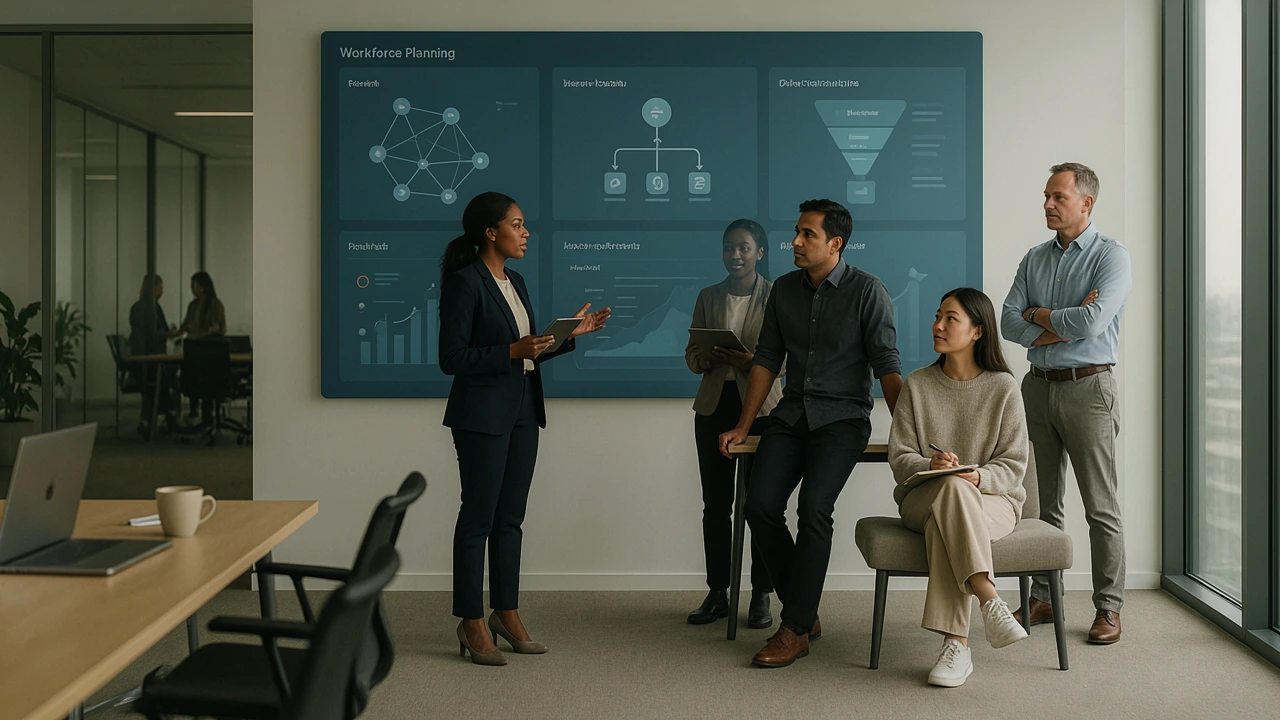
Workforce planning is also becoming a central part of modern HR. Previously, companies often approached hiring when vacancies appeared. Today, however, organizations are increasingly considering future business requirements before deciding when and where to recruit.
Effective workplace management strategies connect workforce requirements with business growth, technology adoption and changing customer demand. Therefore, HR leaders need to understand which capabilities will be essential several years from now, not simply which positions are open today.
This approach can also improve financial planning. When HR and finance teams work together, organizations can forecast labor costs, identify critical roles and determine whether hiring, reskilling or automation offers the most practical solution.
Talent Acquisition Is Becoming More Flexible
Talent acquisition trends are also moving toward greater flexibility. Companies are experimenting with different approaches to sourcing and evaluating candidates while using technology to improve recruitment processes.
Artificial intelligence can help recruiters identify suitable candidates, organize applications and support repetitive administrative tasks. Nevertheless, human judgment remains essential. Recruitment decisions involve communication, cultural understanding and assessment of potential, all of which require careful consideration.
Moreover, employers need to ensure that technology supports a fair and transparent hiring experience. Candidates increasingly expect organizations to explain how recruitment technology is being used and how their information is handled.
Employee Development Can Reduce Hiring Pressure
Recruiting is only one part of solving workforce challenges. In many cases, developing existing employees can provide a more sustainable answer.
Companies that invest in learning programs can create stronger internal talent pipelines while improving employee engagement. This is where employee engagement research becomes valuable. Employees are more likely to remain committed when they see opportunities to build skills, advance their careers and contribute to meaningful work.
Consequently, reskilling and upskilling can reduce dependence on external recruitment. At the same time, employees gain capabilities that help organizations respond faster when business priorities change.
Leadership Must Adapt to Changing Workforce Needs
Changing workforce requirements are also placing new expectations on managers and executives. Leaders need to understand how technology, employee expectations and business transformation affect people and performance.
Leadership development insights show why managers need stronger capabilities in communication, coaching and change management. Furthermore, leaders must become comfortable managing teams with different levels of experience, different working arrangements and increasingly diverse skill sets.
Strong leadership can therefore become a competitive advantage. When managers communicate clearly and support continuous learning, employees are better positioned to adapt to changing responsibilities.
The Future of Work Requires Continuous Adaptation
Future of work research increasingly highlights adaptability as an important organizational capability. Businesses cannot always predict which skills will dominate several years from now. However, they can create systems that make it easier for employees and teams to adapt.
This means organizations should treat learning as an ongoing process rather than an occasional training activity. At the same time, workforce data can help HR teams identify emerging capability gaps before they become major recruitment problems.
Technology will continue to influence this transformation. However, successful workforce strategies will depend on combining technology with human judgment, effective leadership and meaningful employee development.
Practical Workforce Insights for HR Leaders
HR leaders can prepare for these changes by regularly reviewing the skills their organization currently has and comparing them with future business requirements. This simple process can reveal whether a workforce needs additional hiring, targeted development or redesigned roles.
Additionally, recruitment teams should evaluate candidates based on relevant capabilities and potential rather than relying exclusively on conventional qualifications. Meanwhile, HR departments can strengthen retention by creating visible career pathways and meaningful learning opportunities.
Most importantly, hiring should become part of a broader workforce strategy. Organizations that connect talent acquisition with employee development, leadership and business planning will be better prepared for continued changes in the labor market.
For practical HR trends and insights that help organizations strengthen hiring and workforce planning, reach out to HRInfoPro today.
Stay informed with HRInfoPro for timely workforce research, leadership insights and strategies for building a future ready organization.