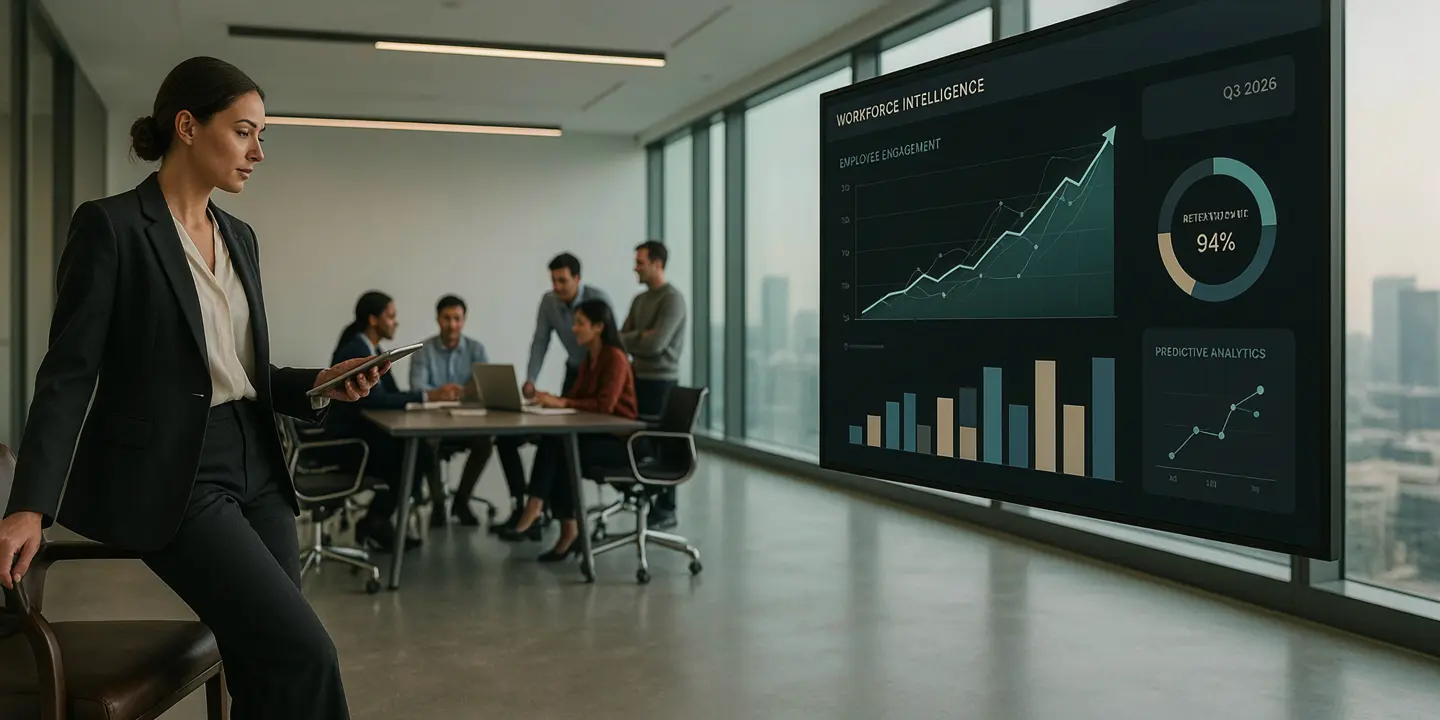
People analytics has become an important part of modern human resources as organisations look for better ways to understand their workforce. However, the role of people analytics is changing. Instead of simply presenting figures through dashboards, HR teams are increasingly using workforce data to understand patterns, anticipate challenges and support better business decisions.
Traditional dashboards remain useful for monitoring employee numbers, turnover, absence and recruitment activity. Nevertheless, today’s HR professionals need deeper context. The real value comes from understanding why workforce patterns occur and what organisations can do in response.
This shift is creating new opportunities for HR trends and insights, particularly as technology makes it easier to connect information from recruitment, performance, engagement, learning and workforce planning.
Moving Beyond Traditional Dashboards
Dashboards can show what is happening across an organisation, but they do not always explain why it is happening. For example, a dashboard might reveal increasing employee turnover within a particular department. A more advanced people analytics approach can examine whether workload, management practices, career opportunities, compensation or employee experience are contributing to the pattern.
Consequently, HR teams can move from reporting historical information towards developing more meaningful workforce intelligence. This change allows decision makers to consider evidence alongside professional experience when developing workplace management strategies.
As data becomes more accessible, HR leaders can also identify relationships between workforce conditions and business outcomes. This creates a stronger foundation for strategic workforce planning.
Predictive Insights Are Changing HR Decisions
The next stage of people analytics involves predictive capabilities. Artificial intelligence and machine learning can identify patterns across large datasets and help organisations understand potential future workforce scenarios.
For example, organisations can analyse historical recruitment information, employee movement and engagement data to identify patterns associated with retention challenges. Similarly, workforce planning models can help HR teams understand potential skills shortages and future staffing requirements.
However, predictive analytics should support human decision making rather than replace it. Data models depend on the quality of the information available to them. Therefore, HR professionals still need to understand the context behind workforce data and consider factors that may not appear in a dataset.
Connecting Employee Experience With Business Outcomes
People analytics is also becoming more closely connected with employee experience. Organisations can combine information from employee surveys, performance systems, learning platforms and workforce records to develop a broader view of the employee journey.
Employee engagement research can provide valuable context when organisations investigate retention, productivity or workplace satisfaction. Instead of looking at engagement scores in isolation, HR teams can examine how employee experiences change across different stages of employment.
For instance, insights from onboarding, development and performance processes can help identify areas where employees may need additional support. Over time, these insights can contribute to more responsive people strategies and stronger organisational experiences.
Supporting Smarter Talent Acquisition
Recruitment is another area where people analytics can provide significant value. Hiring teams can examine recruitment channels, candidate conversion rates, time to hire and post hire performance to understand which approaches are producing sustainable results.
These insights can also complement emerging talent acquisition trends. As organisations compete for specialised skills, understanding candidate behaviour and workforce requirements becomes increasingly important.
Rather than relying exclusively on historical hiring patterns, organisations can use workforce data to identify emerging skills requirements and anticipate future recruitment needs. This allows talent strategies to become more closely aligned with business growth and changing market conditions.
Strengthening Leadership Development
People analytics can also support leadership development by providing evidence about management effectiveness and employee experiences. Organisations can examine relationships between leadership practices, team engagement, retention and performance.
Leadership development insights become more meaningful when they are connected to broader workforce information. Instead of evaluating leadership programmes only by participation rates, organisations can examine longer term changes in employee development, internal mobility and team outcomes.
Furthermore, this approach can help organisations identify areas where managers may benefit from additional development. Used responsibly, workforce data can support more targeted learning and leadership programmes.
The Role of Artificial Intelligence in HR Analytics
Artificial intelligence is expanding the possibilities of people analytics. Modern systems can process large volumes of workforce information, identify patterns and generate insights more quickly than conventional reporting methods.
However, organisations must consider privacy, transparency, data quality and responsible use. Employees should understand how their information is being used, while HR teams need appropriate safeguards around sensitive workforce data.
Therefore, successful analytics programmes require more than advanced technology. They also require clear governance, responsible data practices and HR professionals who can interpret analytical findings appropriately.
Preparing for the Future of HR Insights
The future of HR analytics is likely to involve increasingly connected workforce information. Instead of maintaining separate views of recruitment, engagement, performance and learning, organisations can develop a more integrated understanding of the employee lifecycle.
Future of work research can further support this transition by helping HR leaders examine changing skills, workplace structures and employee expectations. As hybrid work, automation and new technologies continue to reshape organisations, workforce intelligence can become an important foundation for planning.
Nevertheless, technology should remain a means rather than an objective. The strongest HR analytics strategies connect data with practical decisions that improve workforce planning and employee experiences.
Actionable Insights for HR Leaders
Organisations looking to move beyond dashboards should first identify the workforce questions they need to answer. Once those questions are clear, HR teams can determine which data is genuinely useful and establish reliable methods for analysing it.
It is equally important to combine quantitative information with employee feedback and professional judgement. This creates a more complete picture and reduces the risk of making decisions based solely on numerical patterns.
Ultimately, people analytics can become a strategic capability when organisations use workforce data to understand causes, anticipate possibilities and take informed action. By combining technology, responsible data management and human expertise, HR teams can develop deeper insights that support long term organisational performance.
Stay informed with practical HR trends and insights covering workforce analytics, employee experience and evolving people practices.
Reach out to HRInfoProfor professional perspectives that can help your organisation turn workforce information into meaningful HR strategies.