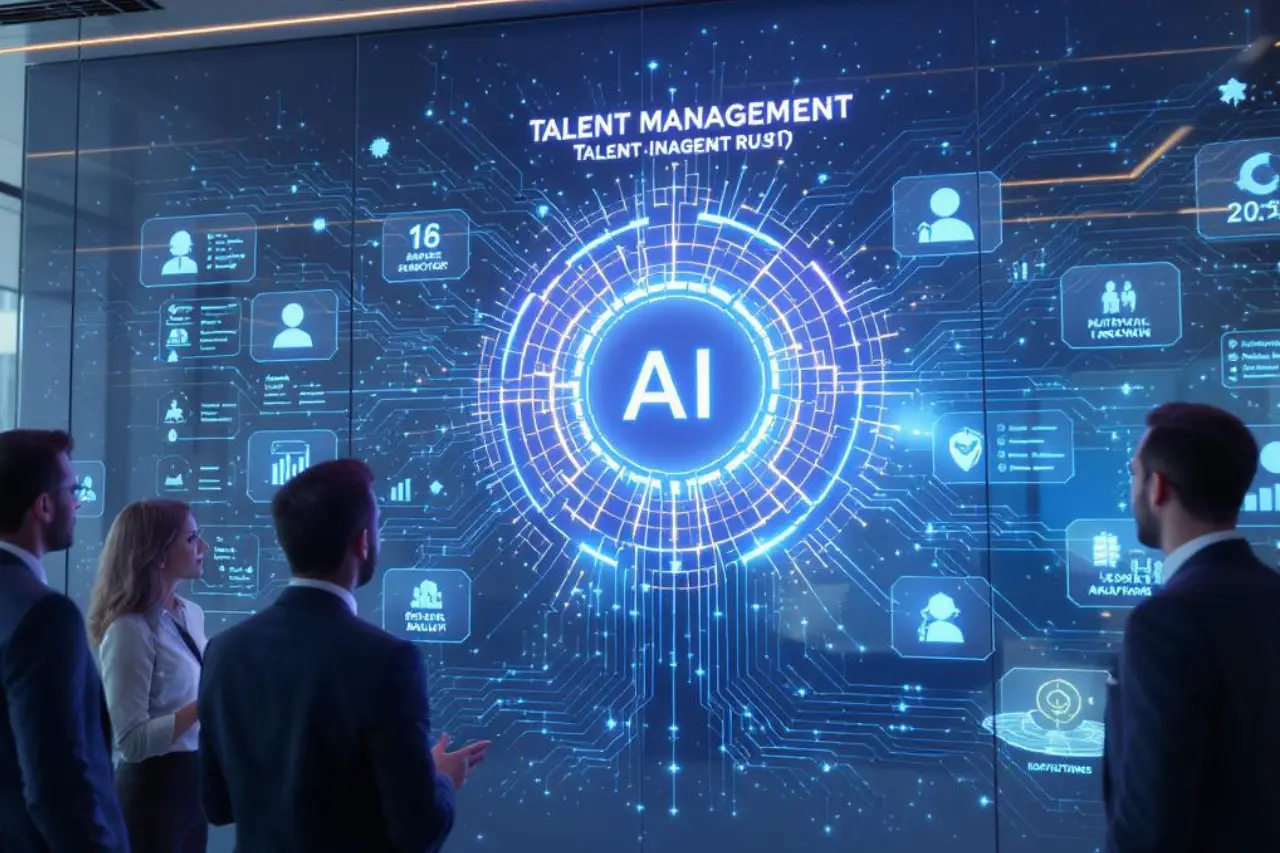
Human resources is entering a new phase as artificial intelligence moves beyond simple assistance and begins supporting more complex workforce decisions. Oracle is responding to this shift with new Fusion Agentic Applications and AI agents designed to help organizations improve talent management, employee development, internal mobility, and workforce operations.
Announced on August 11, 2026, Oracle said its new HR capabilities are designed to help organizations accelerate workforce development, respond to changing skills requirements, and strengthen internal mobility. The technology operates within Oracle Fusion Cloud Applications and can use enterprise data, workflows, policies, permissions, and approval structures to support business processes.
As a result, the development reflects a broader movement across HR technology where AI is becoming increasingly connected to everyday workforce management.
Oracle Fusion AI Agents Move Beyond Assistance
Traditional workplace software generally waits for employees or managers to initiate an action. Oracle’s latest approach aims to make AI more proactive.
Oracle describes its Fusion Agentic Applications as systems powered by coordinated teams of specialized AI agents that can reason, coordinate activities, and execute work within defined business processes. These applications operate within existing security and governance frameworks while surfacing exceptions and decisions that require human judgment.
This distinction is important because organizations are increasingly looking for technology that can reduce administrative work rather than simply provide another interface for completing it.
Consequently, Oracle Fusion AI Agents could become particularly relevant for HR teams dealing with large workforces, changing skills, complex policies, and growing expectations around employee experience.
Career Growth Becomes More Proactive
One of the most notable additions is the Career Advancement Command Center. Oracle says the application can connect employees with open roles, provide insights into skill requirements, recommend relevant training and opportunities, and maintain engagement through career related communications.
This could change how organizations approach internal mobility. Instead of waiting for employees to search for their next opportunity, HR systems can potentially identify relevant career paths and development opportunities earlier.
Furthermore, this approach aligns closely with HR trends and insights showing that employees increasingly value career progression and meaningful development. For employers, stronger internal mobility can also help retain institutional knowledge and reduce dependence on external hiring.
AI Can Support Better Talent Reviews
Talent reviews often require managers to evaluate performance information, compare employee ratings, identify development needs, and prepare for succession discussions. These processes can become time consuming and subjective when information is spread across different systems.
Oracle’s Team Talent Calibration and Review Workspace is designed to help managers identify rating inconsistencies and provide evidence based recommendations before talent review meetings. The system can synthesize information from multiple talent sources to provide additional context.
Importantly, this does not eliminate the need for managers. Instead, AI can help organize information so leaders can spend more time discussing talent priorities, succession planning, retention, and development.
This approach supports Leadership development insights because effective leadership increasingly depends on using workforce information thoughtfully rather than relying entirely on intuition.
Learning Can Become More Targeted
Employee development is another area where Oracle is applying AI. The Team Learning and Development Workspace for Managers is designed to help identify skill gaps, monitor learning requirements, and prioritize development actions.
As organizations face rapidly changing technology and business models, skills can become outdated faster than traditional training cycles can respond. AI driven learning recommendations could therefore help companies connect employee development more closely with emerging business requirements.
Moreover, Oracle’s broader HCM platform already includes AI capabilities for skills, learning, recruiting, compensation, employee experience, and workforce management.
Managers Gain More Decision Support
Managers often spend significant time handling administrative HR activities. Oracle’s Manager Concierge Workspace is designed to bring compensation, performance, talent, and absence information together while supporting policy based actions and approvals.
For managers, this could create a more unified experience. Instead of navigating multiple HR processes separately, they can receive prioritized information and take appropriate actions within a connected environment.
However, the value of these systems will depend on data quality, organizational policies, and appropriate governance. AI can support decision making, but organizations still need people accountable for important workforce decisions.
Hiring Could Become More Efficient
Talent acquisition is another area receiving agentic capabilities. Oracle’s Hiring Workspace for Store Managers is designed to reduce administrative work during recruitment and accelerate hiring workflows. The platform can also help streamline candidate management and interview scheduling.
This development arrives as Talent acquisition trends continue to evolve around automation, skills based hiring, candidate experience, and faster recruitment cycles.
For organizations managing high volume recruitment, reducing repetitive coordination could allow hiring managers to spend more time evaluating candidates and building stronger relationships.
Employee Experience Remains Central
Technology alone does not create a better workplace. Its value depends on whether employees and managers actually experience improvements in their daily work.
Oracle’s AI capabilities for HCM are designed to support areas including employee service, career development, hiring, talent management, and workforce operations. The company emphasizes embedded AI within the Fusion environment and access to enterprise data under established security controls.
Therefore, HR leaders should evaluate AI initiatives based on measurable improvements in employee experience, productivity, development, and decision quality rather than simply counting how many AI features are available.
What This Means for the Future of Work
The latest developments offer a glimpse into how Future of work research may evolve. AI is increasingly moving from a tool employees manually operate toward technology that can coordinate processes and recommend or execute actions within defined boundaries.
That shift could change the role of HR professionals. Instead of spending large amounts of time collecting information and coordinating routine processes, HR teams may have more capacity for workforce strategy, leadership development, organizational culture, and employee relationships.
At the same time, organizations will need clear governance around AI supported workforce decisions. Privacy, fairness, transparency, security, and human oversight should remain central as these systems become more capable.
Actionable Insights for HR Leaders
HR leaders considering agentic AI should begin with specific workforce problems rather than adopting technology simply because it is new. Career mobility, recruitment administration, skills development, talent reviews, and manager support can provide practical areas for evaluating measurable value.
Organizations should also establish clear governance before expanding AI across sensitive employee processes. Regular reviews of data quality, access controls, decision outcomes, and employee feedback can help ensure that automation supports people rather than creating additional complexity.
Ultimately, Oracle’s latest developments show that the next stage of HR technology is likely to focus on proactive execution, connected workforce data, and more personalized employee experiences. The organizations that combine these capabilities with thoughtful human leadership may be best positioned to adapt to changing workforce expectations.
Stay Ahead With HRInfoPro
For practical HR trends and insights, workplace technology developments, and smarter workforce strategies, connect with HRInfoPro for timely guidance built for modern HR leaders.
Reach out to HRInfoPro to explore how emerging AI capabilities can support stronger employee experiences, talent development, and future ready workforce planning.
Source – oracle